
On November 12, 2020, Lazard delivered "Project Salamander" to the special committee of Urovant Sciences' board, internally codenamed "Beta" in the deck itself, with Sumitovant Biopharma codenamed "Salamander." Every figure below comes from that presentation.
The short version
Sumitovant already owned 72% of Urovant, a stake it had acquired eleven months earlier as part of a $3 billion transaction with Roivant. In September 2020 it approached Urovant about buying the rest. The two sides negotiated from a $12.50 opening bid to a $16.25 best-and-final over the course of about six weeks, a 105% premium to the unaffected price, and Urovant's own board pushed back once more after the "final" offer and got told no.
Deal snapshot
| Target | Urovant Sciences Ltd. (Nasdaq: UROV) — codenamed "Beta" |
| Acquirer | Sumitovant Biopharma Ltd. (majority owner) — codenamed "Salamander" |
| Acquirer’s existing stake | ~72% of Urovant, acquired Dec. 2019 as part of a ~$3B transaction with Roivant |
| Target’s financial advisor | Lazard |
| Structure | All-cash merger, controlling-shareholder squeeze-out |
| Opening bid (Nov 6, 2020) | $12.50/share |
| Best-and-final (Nov 10, 2020) | $16.25/share |
| Premium to unaffected price ($7.91, 11/11/20) | 105% |
| Equity value / enterprise value | ~$584M / ~$681M |
The setup: bought in, then bought out
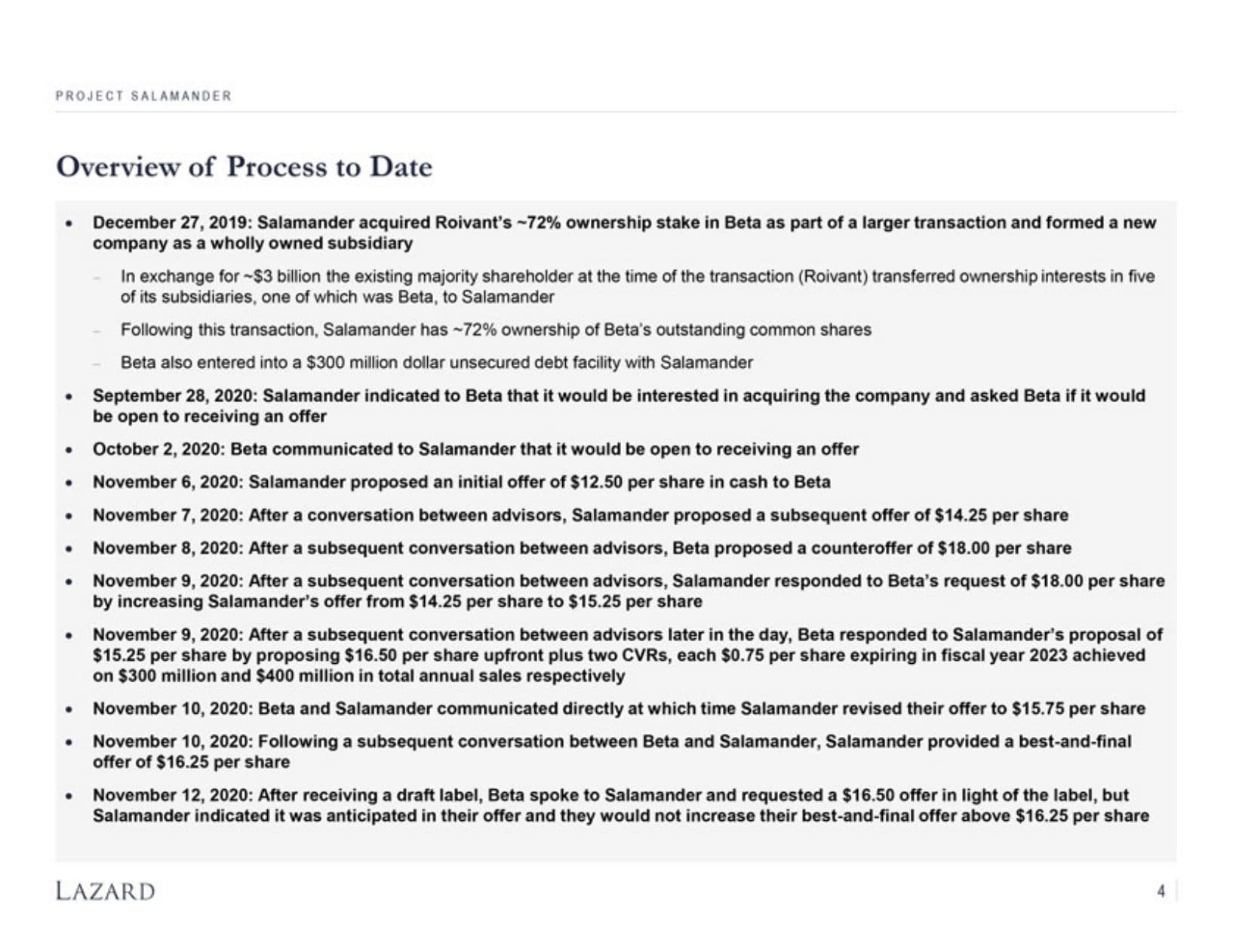
On December 27, 2019, Sumitovant acquired Roivant's roughly 72% ownership stake in Urovant as part of a much larger transaction, in which Roivant transferred ownership interests in five of its subsidiaries to Sumitovant in exchange for roughly $3 billion. Urovant also entered into a $300 million unsecured debt facility with Sumitovant at the same time. That combination, majority ownership plus a debt relationship, is exactly the structural setup that makes a later squeeze-out both more likely and more legally sensitive: the controlling shareholder is already the company's lender.
Nine months later, on September 28, 2020, Sumitovant indicated to Urovant that it would be interested in acquiring the company and asked if Urovant would be open to receiving an offer. Urovant said yes on October 2. That's the entire pre-negotiation phase, roughly two lines in the deck, before the actual price discussion starts.
The consideration, and what a 105% premium actually means
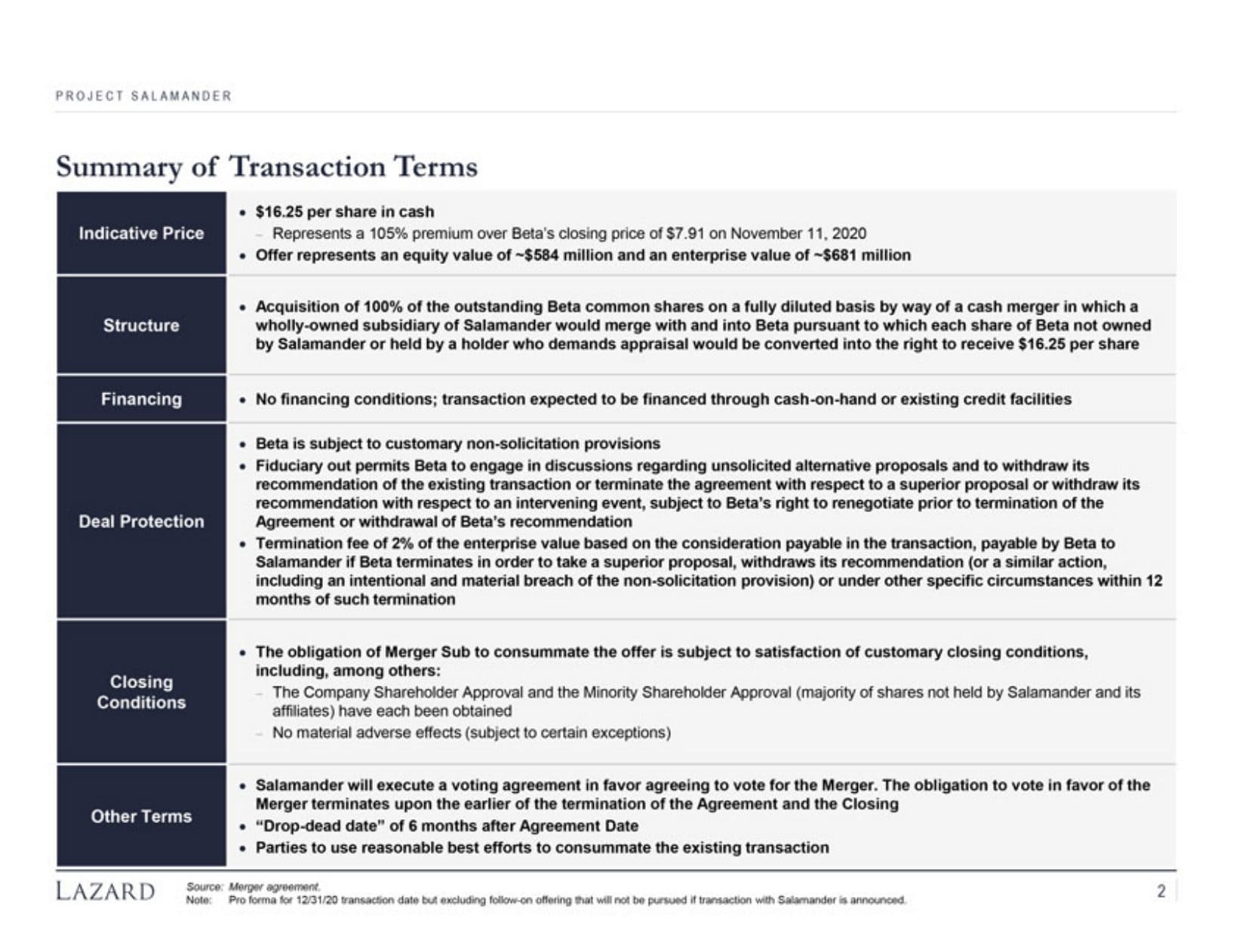
The final terms: $16.25 per share in cash, 36.0 million fully diluted shares (treasury stock method), an equity value of roughly $584 million and an enterprise value of roughly $681 million after netting $97 million of net debt. The deal carried no financing condition, funded through cash on hand or existing credit facilities, the same structural signal covered in our Pfizer/Seagen buy-side breakdown: a controlling shareholder that already has the cash doesn't need to negotiate around financing risk. The deal protection was standard for this structure: a 2% termination fee based on enterprise value, a fiduciary out for superior proposals, and a voting agreement obligating Sumitovant to vote its shares in favor.
Here's the detail that a headline premium number hides. The deck discloses three separate premium calculations: 105% to the spot price on November 11, 104% to the 15-day VWAP, and just 3% to the 52-week high of $15.75 set on January 6, 2020. The stock had fallen hard over the course of 2020 and the offer was, functionally, a modest premium to where the stock had already traded less than a year earlier, dressed in a much larger percentage relative to a depressed spot price. Both numbers are true. Reading only the 105% figure would badly misread the negotiation.
Five days, five prices
The actual back-and-forth, once it started, moved fast. November 6: Sumitovant opens at $12.50. November 7: after a conversation between advisors, Sumitovant moves to $14.25. November 8: Urovant counters at $18.00. November 9: Sumitovant responds to the $18.00 ask by moving from $14.25 to $15.25, then later the same day Urovant counters again, proposing $16.50 upfront plus two contingent value rights worth $0.75 each tied to $300 million and $400 million in annual sales milestones. November 10: Sumitovant and Urovant speak directly, Sumitovant moves to $15.75, then following a further conversation delivers a best-and-final of $16.25. November 12: after receiving a draft label from the FDA (more on this below), Urovant asks for $16.50 one more time. Sumitovant says no, and $16.25 holds.
That's the negotiation in full: five moves in five business days, on a controlling shareholder that already owned 72% of the company and could, in principle, have simply waited the special committee out. It didn't, which is itself informative, and the special committee pushed twice more even after being told a number was "final," which is also informative. Neither side treated the word "final" as literally final until the second attempt actually failed.
The launch-curve benchmark: pricing a drug that just got approved
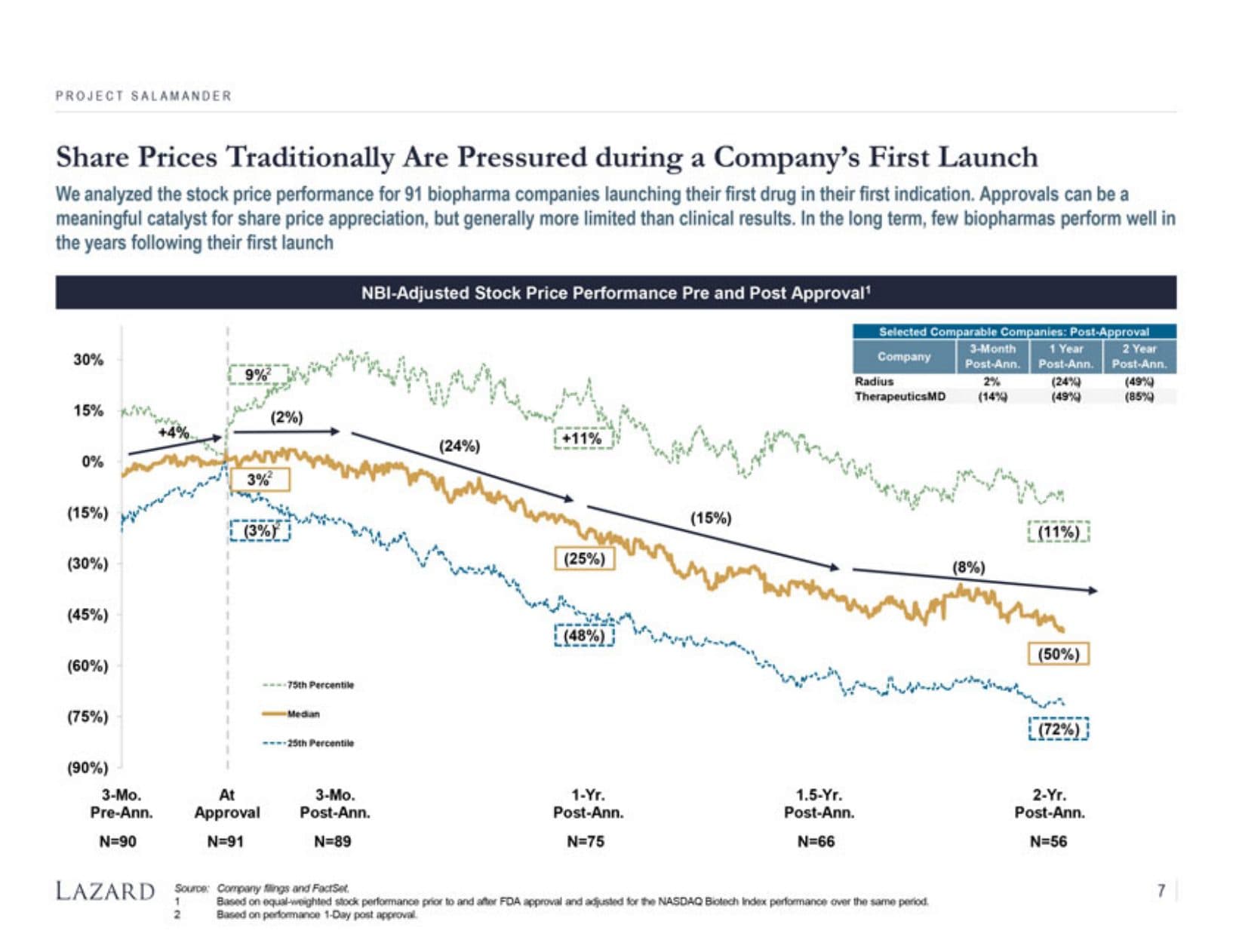
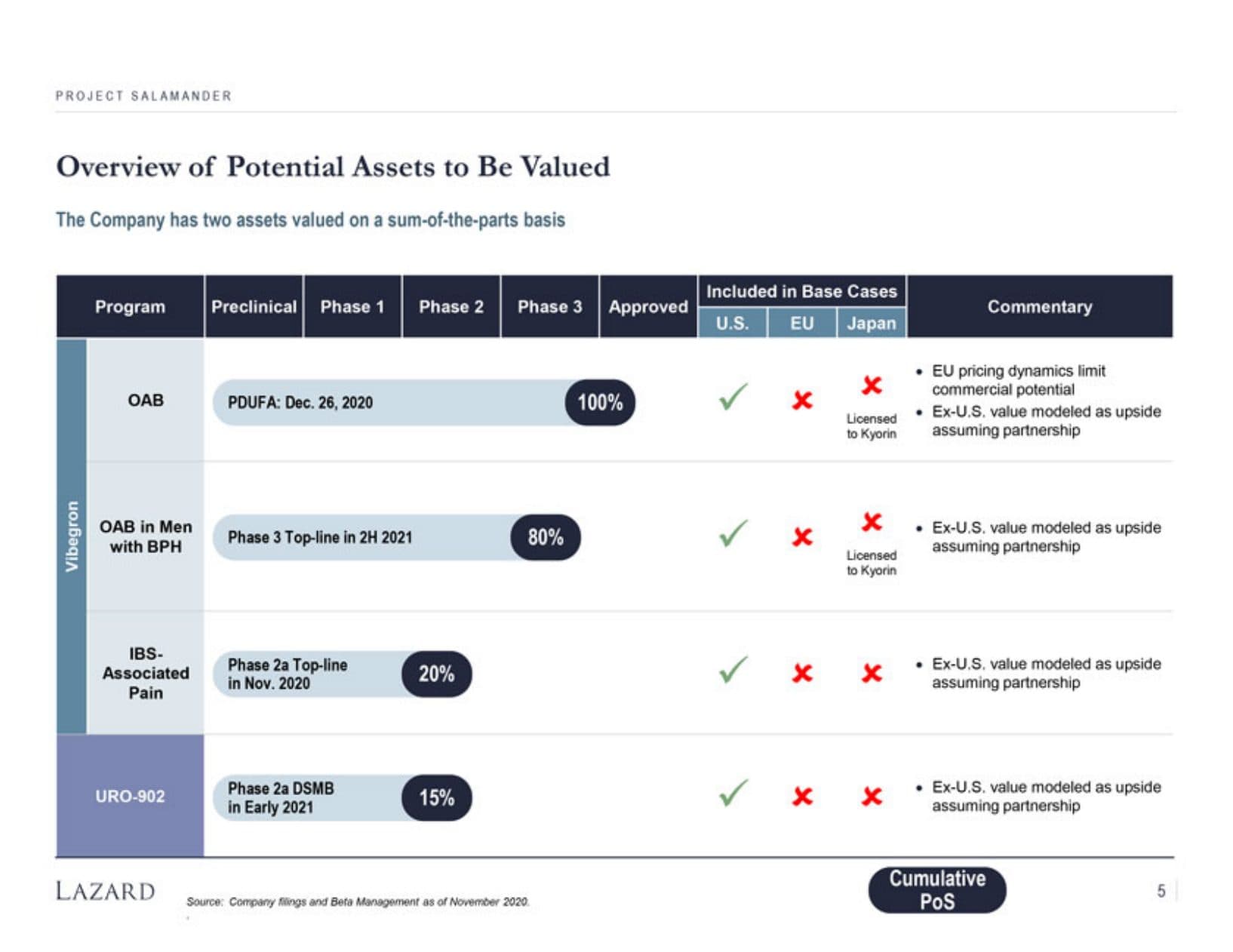
This deal closed at an unusual moment: Urovant had just received a draft FDA label for vibegron, its lead drug for overactive bladder, with formal approval expected imminently (the deck notes a PDUFA date of December 26, 2020). Lazard's job included valuing a company on the cusp of its first commercial launch, which is a genuinely hard valuation problem, and this page is the analysis built to frame it.
Lazard analyzed stock price performance across 91 biopharma companies launching a first drug in a first indication, and the finding is a real gut-check for anyone who assumes an approval is straightforwardly good for the stock: the median company's NBI-adjusted stock price fell roughly 50% within two years of approval, with only the 75th percentile group showing a modest gain. Approvals can be a catalyst, but they are frequently priced in well before the actual approval date, and the harder, longer battle, actual commercial execution against a launch curve, is what determines the stock afterward. That's the analytical basis for why a board might reasonably prefer a certain $16.25 today over the uncertain outcome of actually launching the drug themselves.
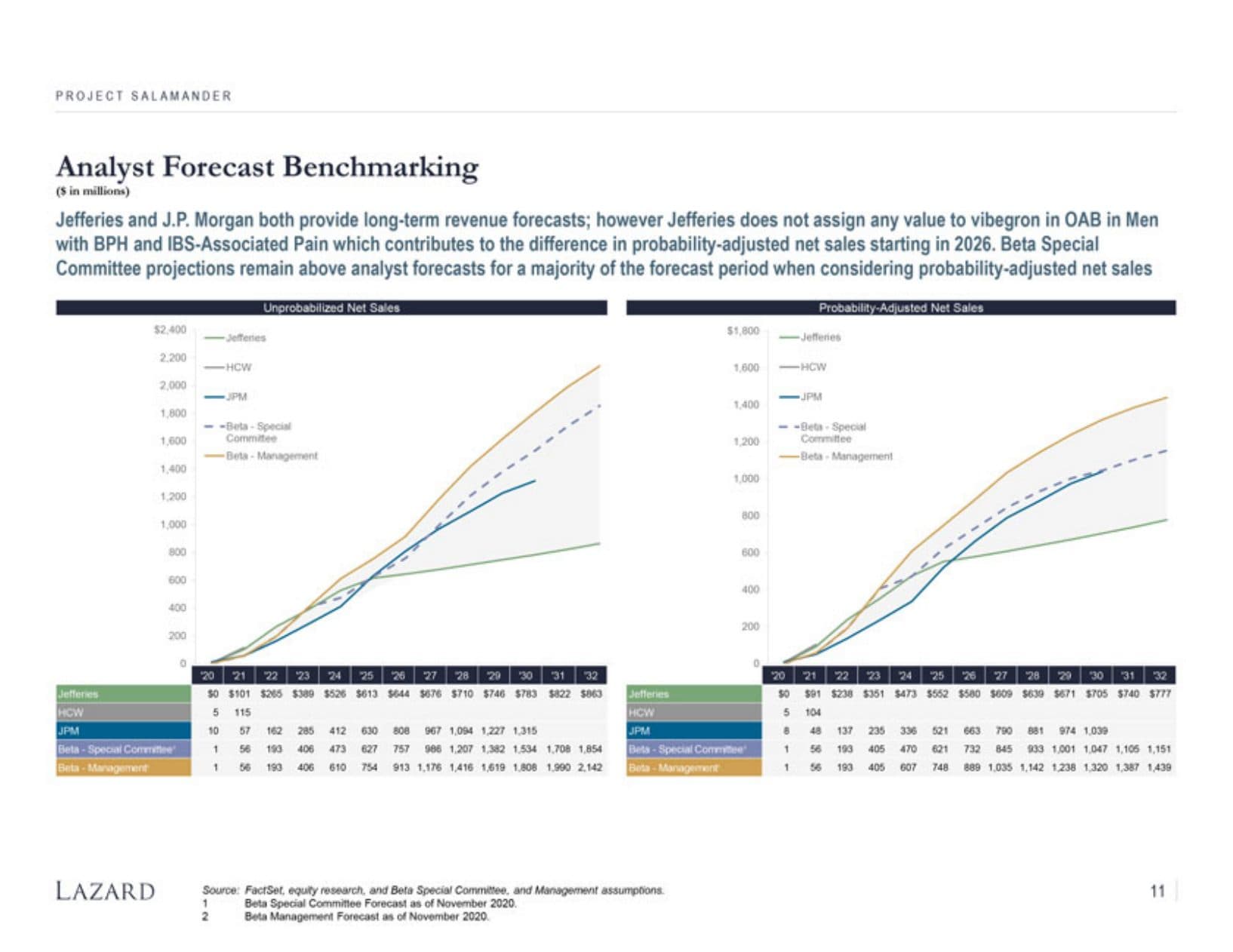
This page makes the abstract base-rate argument concrete: Urovant's projected non-probability-adjusted net sales for vibegron, benchmarked directly against the actual historical launch curve of Myrbetriq, an approved drug in the same overactive-bladder category. Both the special committee's own forecast and management's forecast are shown side by side, and both track meaningfully above Myrbetriq's historical curve in the early years. That's the company's own bull case, laid next to the real-world comparable it was benchmarked against, letting a reader judge for themselves how aggressive the assumption actually is.
The base rate that undercuts the premium headline
The annotated share price chart puts the whole deal in context. Urovant's stock is down 32% since IPO as of the November 11, 2020 spot price, against a NASDAQ Biotechnology Index up 14% and the S&P 500 up 23% over the same window. The stock's single largest visible move on the chart isn't a clinical trial readout, it's the "transient stock price jump at closing of Roivant/Salamander deal" in late December 2019, which the deck itself attributes partly to the unwinding of short interest rather than a fundamental re-rating.
That's the real backdrop against which $16.25 has to be judged: not a healthy, appreciating stock being bought out at a premium, but a stock that had round-tripped most of a prior spike and was trading near multi-year lows going into the offer.
What this teaches about controlling-shareholder deals
A premium headline is only half the story. This deal was 105% above spot and 3% above the 52-week high, both numbers were disclosed on the same page, and reading only the first would badly misread how generous the offer actually was.
"Best-and-final" is a negotiating tactic, not always a hard stop. Urovant's special committee tested Sumitovant's stated final offer a second time, after receiving genuinely new information (the FDA draft label), and only stopped pushing once rebuffed twice.
A controlling shareholder's prior transaction history matters. Sumitovant had bought its 72% stake through a complex multi-subsidiary transaction with Roivant just eleven months earlier; that transaction, and the debt facility that came with it, shaped the negotiating relationship long before a price was ever discussed.
And a valuation built around an imminent drug approval has to price in the base rate of what happens after approval, not just the approval itself. Lazard's 91-company launch-curve study is exactly the kind of analysis that turns a single binary event (will it get approved) into an actual, evidence-based valuation range for what comes next.
Every slide and figure in this piece comes from the Lazard board presentation delivered to Urovant Sciences Ltd.'s Special Committee on November 12, 2020, internally titled "Project Salamander." This article is for informational purposes only and does not constitute investment, legal, or financial advice.
Keep reading
Want this applied to your situation?
If you're prepping for healthcare coverage or M&A technicals, or trying to understand how a controlling-shareholder squeeze-out actually gets negotiated, a session covers your specific situation.